
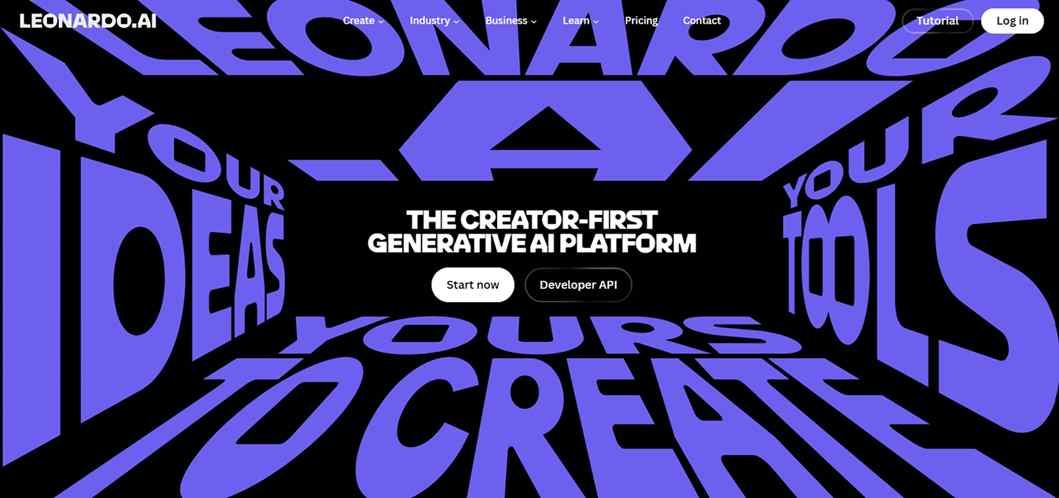
Leonardo AI is a creative platform for generating, editing, and producing visual content with AI. It started with a strong focus on AI image generation but has grown into a broader creative workspace that covers images, video, design, animation, and other visual production tasks. Users can create visuals from text prompts, work from reference images, edit existing content, upscale images, remove or replace backgrounds, and turn still images into animated video. One of its biggest advantages is the variety of models available within the same platform. Users can choose between Leonardo's own models and a growing selection of third-party models from companies and AI projects such as OpenAI, Google, Black Forest Labs, ByteDance, Kling, MiniMax, Ideogram, Recraft, Krea, and others. This means creators can experiment with different approaches without having to move between several AI applications. The platform currently supports a broad range of image and video models, including FLUX, GPT Image, Seedream, Ideogram, Kling, Seedance, Veo, Hailuo, Wan, and Leonardo's own Lucid and Phoenix models. It also puts considerable emphasis on the creative process rather than simply generating a single image from a prompt. Its Flow State feature is designed for brainstorming, allowing users to explore multiple visual directions from an initial idea and gradually narrow down the style or composition they want. Tools such as Blueprints can help users start specific creative projects, while Elements and personal AI model training provide additional ways to create more consistent or customized results.
The platform also includes features for maintaining character and brand consistency, which can be useful when producing a series of images or videos rather than one-off visuals. For video creators, it provides text-to-video and image-to-video capabilities, along with tools for animating still images and creating short visual sequences. Developers can also access its models through its API, with production usage available on a pay-as-you-go basis, making the platform relevant to businesses that want to integrate its generation capabilities into their own applications. For users considering a Leonardo AI alternative, the main factors to compare are model selection, image and video quality, editing tools, character consistency, customization, generation limits, pricing, and API access. It is particularly well suited to designers, marketers, content creators, agencies, and creative teams that want a single environment where they can move from an initial idea to generated, edited, enhanced, and animated visual content without needing a highly technical workflow.




.webp)